
Guides · Tue, Nov 24, 2026
Mardi Gras World and the museum circuit: the indoor New Orleans
Rain, heat or a quiet day between festivals: New Orleans indoors is a circuit, not a compromise. Start where Mardi Gras is made, in Kern Studios' working float den at Mardi Gras World, then work the heavyweight museums in the order that suits a day: the National WWII Museum's campus, the Cabildo and the Presbytère on Jackson Square, NOMA up in City Park, and the Ogden and the Contemporary Arts Center in the Warehouse District. Tickets, timing and the pass arithmetic.
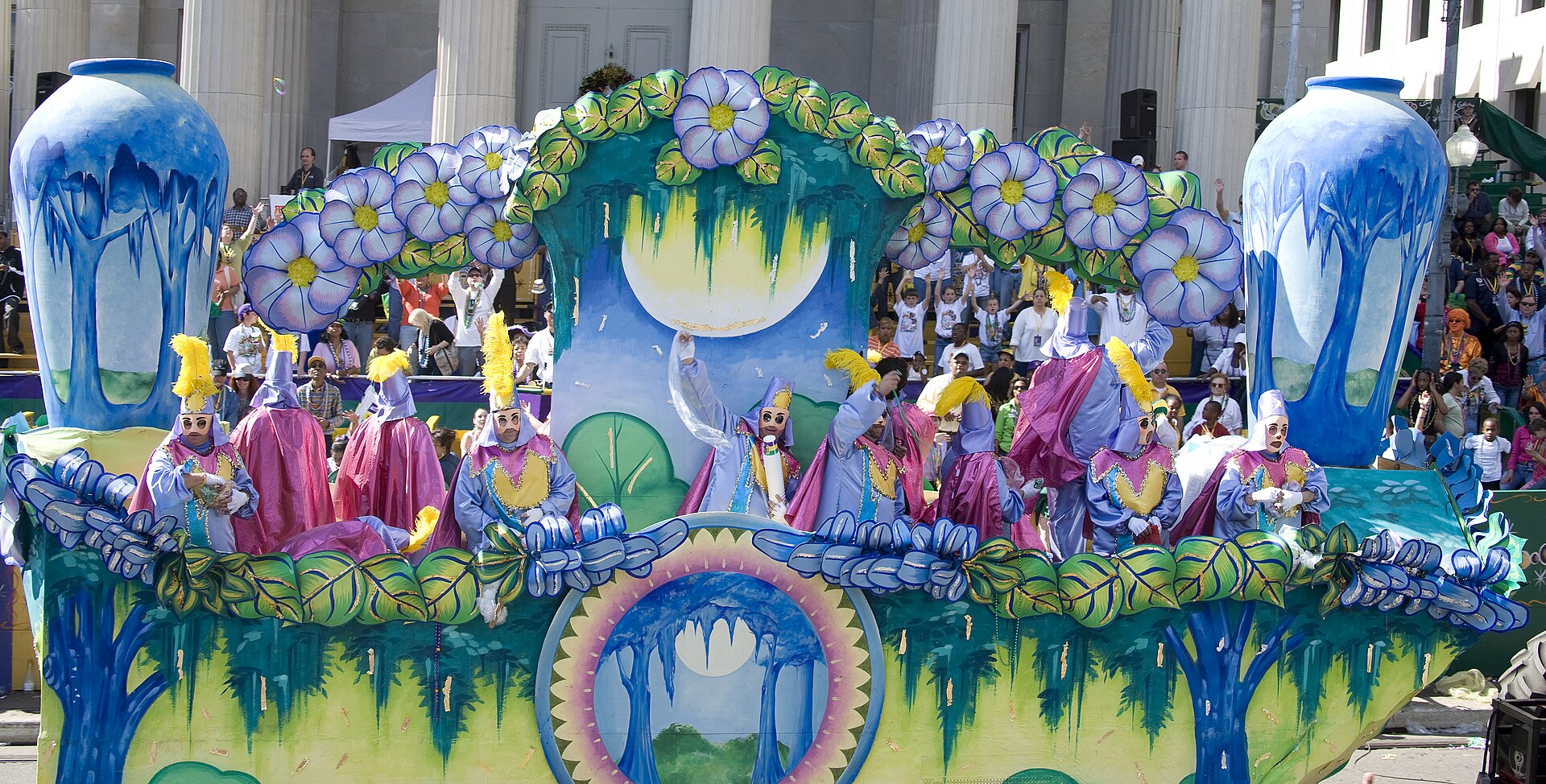
Every New Orleans trip needs an indoor plan, for the afternoon the sky opens, the heat sits down on the city, or the group simply wants a day off its feet. The good news is that indoors here is not a fallback. It is a circuit of heavyweight rooms, beginning with the one place on earth where Mardi Gras is manufactured, and running through a war museum of national rank, two state museums on the city's most famous square, an art museum in an oak park, and the contemporary pair in the Warehouse District. This guide sequences them the way a day actually flows, with the ticket logic done plainly. Our attractions pages carry the standing record for each place; this piece is the circuit itself, in order.
Mardi Gras World: where the parades are made
Blaine Kern's Mardi Gras World, at 1380 Port of New Orleans Place beside the Convention Center, is not a museum in the glass case sense. It is Kern Studios' working float den, a vast warehouse where the floats for Rex, Zulu and the city's biggest krewes are designed, sculpted and painted all year, opened to visitors as a tour in 1984 and still the best backstage hour in the city. The official pattern, from Mardi Gras World's own site, is simple: open seven days a week from 9:00am to 5:30pm, tours departing every thirty minutes, first admission at 9:30am and last admission at 4:30pm, closed only on Thanksgiving, Christmas, Easter and Mardi Gras Day itself. The tour runs about an hour, through the sculpting and painting shops and past floats in every state from foam block to finished giant, and a free shuttle serves downtown pick up points if you call ahead. Go in the morning, before the day's groups stack up, and go even if your trip has nothing to do with Carnival: watching a twenty foot figure take shape out of styrofoam and paint explains New Orleans faster than any history panel. The private behind the scenes tour below is the deeper version the site carries, with a second line and a distillery tasting attached; the standard tour books direct or on the pass discussed below.
Book the Mardi Gras World behind the scenes tourvia Viator · affiliate link
The heavyweight: the National WWII Museum
Five minutes from Mardi Gras World, the National WWII Museum, at 945 Magazine Street, is the official United States museum of the Second World War and one of the most visited attractions in the city, a campus of pavilions that began as a D Day museum and now covers the whole war, from the Higgins boats built in this city to the road to Berlin and the Pacific. Aircraft hang over the atrium, and the personal stories carry the detail. The site's own place record gives the only planning advice that matters: book a timed ticket, arrive at opening, and give it at least half a day, because visitors who allow two hours leave annoyed at themselves. This is the one museum in the circuit to anchor a day around, and its ticket is the site's wired museum ticket below.
Book National WWII Museum ticketsvia Klook · affiliate link
Jackson Square: the Cabildo and the Presbytère
On the square itself, the Louisiana State Museum keeps the city's two essential small museums in the two matching Spanish colonial buildings that flank St. Louis Cathedral. The Cabildo, on the upriver side, is where the Louisiana Purchase transfer was formalized and now tells the state's story from colonization forward. The Presbytère, on the downriver side, keeps the city's best permanent Mardi Gras exhibition, the scholarly counterweight to Mardi Gras World's workshop floor: costumes, throws and the social machinery of Carnival explained. Together they take ninety minutes, they cost little, and they sit amid the Quarter's other free pleasures, the square, the cathedral and the riverfront, so they pair naturally with a French Quarter walking morning. Neither needs advance booking in ordinary weeks; both reward arriving before the midday school groups.
The Quarter's second pair: the Jazz Museum and the Mint
Two more indoor rooms sit inside the Quarter itself and pair with the square in a single morning. The New Orleans Jazz Museum occupies the Old United States Mint on Esplanade Avenue at the French Market's end, a building that has been a federal mint, and the museum inside it tells the music's story in instruments, recordings and photographs, with live performances in its intimate listening room that turn a museum visit into a set. It is the daytime half of the city's jazz geography, the explanatory companion to the clubs at night, and it closes the loop this circuit opens at Mardi Gras World: the parades explained at the Presbytère, the music explained at the Mint, the floats explained at the den. A block's walk away, the French Market and Café du Monde give the morning its sugar break, which is how the circuit stays humane: never more than one heavyweight room without a pause for coffee, a river view or a beignet. Families should also know the Audubon Aquarium's place in this geography: it stands on the riverfront at the foot of Canal Street, pairs with the Riverfront streetcar and the ferry, and is the circuit's easiest win with children, while the Louisiana Children's Museum in City Park does the same job at the NOMA end of the map. Neither needs to displace the heavyweights. They are the pressure valve that keeps a museum day enjoyable for the youngest person in it.
City Park and the Warehouse District: art at both ends of the day
Ride the Canal streetcar's City Park branch to its end and the New Orleans Museum of Art stands in City Park among the oaks, the city's fine art museum with a sculpture garden that blurs the indoor plan in the best way; give the garden the golden hour if the weather relents. Back downtown, the Warehouse District holds the contemporary pair on and around Julia Street: the Ogden Museum of Southern Art, built on the art of the American South, and the Contemporary Arts Center across Camp Street, all exhibitions and performance in a converted warehouse. The Ogden's Thursday evening music series, when it runs, is the circuit's best nightcap. A word on pacing, because museum fatigue is the circuit's only real enemy. The WWII Museum alone can hold a full day for anyone with a family story in that war, and visitors regularly emerge at closing having seen half the campus. Treat the two day sequence below as a menu rather than a contract: pick one heavyweight per day, let the smaller rooms orbit it, and leave one slot unplanned for the exhibition you did not know was on. The circuit rewards the unhurried, and New Orleans, a city that eats lunch as an event, is the wrong place to rush a museum.
Sequenced whole, the circuit makes two honest days: Mardi Gras World and the WWII Museum on the first, with the Warehouse District pair as the evening; the Jackson Square museums and NOMA on the second, with the streetcar rides as the connective tissue. If you are stacking three or more paid attractions across those days, price the pass below before buying anything singly; its value in this circuit is real but arithmetic, not automatic, and it depends entirely on how many of its covered attractions you actually enter.
Get the Go City New Orleans passvia Klook · affiliate link
Base in the CBD for an indoor led trip: Mardi Gras World, the WWII Museum and the Warehouse District pair are all at walking distance, and the Quarter and the streetcar lines start across Canal Street. The stay route below is the CBD search.
Book a place to stayvia Booking.com · affiliate link
Set a New Orleans What's On alert and we will email you when special exhibitions open, when museum late nights are announced, and as seasonal programs land on the calendar. The indoor New Orleans is not the city hiding from the weather. On the right day, it is the city at its most concentrated.
More reading on the articles page, or go straight to the events calendar.