
Guides · Mon, Nov 23, 2026
The New Orleans food trail: po'boys, gumbo and the rooms that matter
New Orleans eats in a grammar of its own: the po'boy dressed or not at all, gumbo judged by its roux, beignets under a weather system of powdered sugar, and a handful of old dining rooms where the city's history is served at table height. A trail through the dishes in the order to meet them, the rooms that matter for each, and the guided food walk that strings the Quarter's kitchens together for a first timer.
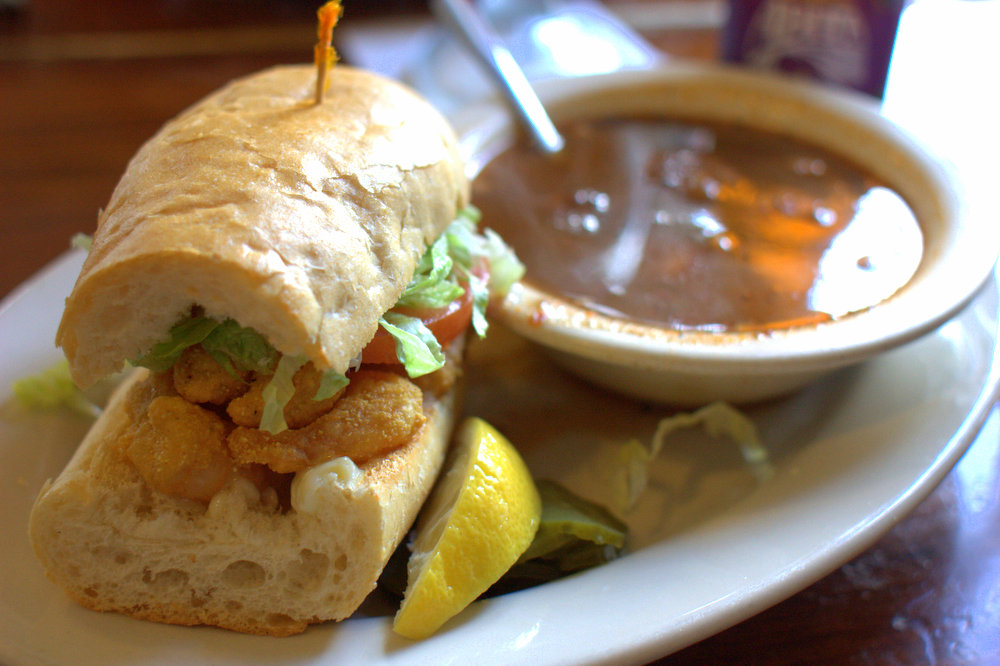
Every city has dishes. New Orleans has a curriculum. The food here is not a scene that changes with fashion; it is a settled canon, Creole and Cajun, French and African and Spanish and Vietnamese layered into a short list of things you are expected to eat, in rooms that have served them for generations, while locals argue about the rankings with genuine feeling. This trail walks the canon in the order a first visit should meet it: the sandwich, the stew, the sweet start to the day, and then the old dining rooms where the canon wears a jacket. Our events calendar carries the food festivals and forums as they land; this piece is the standing trail underneath them, good in any week of the year.
First, the po'boy
The po'boy is the city's democratic masterpiece: a long loaf of New Orleans French bread, crisp crusted and soft inside, filled and then, if you know the word, dressed, which means lettuce, tomato, pickles and mayonnaise, and implies hot sauce at hand. The name is the poor boy of the 1929 streetcar strike, when the Martin brothers, former streetcar conductors turned restaurateurs, fed striking workers free sandwiches and called for another loaf for the poor boy. Order it the way the counter expects: fried shrimp or oysters when the fryers are singing, roast beef with gravy when they are not, half and half if the house allows it, and eat it over the paper, because the gravy and the debris are part of the serving. The rooms that matter are neighborhood rooms. Parkway Bakery and Tavern in Mid-City is the pilgrimage stop, a restored tavern pouring po'boys by the thousand to a line that moves faster than it looks. Liuzza's by the Track, near the Fair Grounds, is the quieter connoisseur's call, the plate in our photograph: a shrimp po'boy and a bowl of gumbo in the same sitting, which is the correct unit of lunch. Domilise's Uptown has fed its corner for a century from behind a bar. None of these places takes reservations, all of them reward arriving before noon, and a po'boy eaten standing at a counter outranks a fashionable one eaten seated, every time.
Then the gumbo, judged by the roux
Gumbo is the test dish, the one locals use to grade a kitchen, and its grammar is strict. It begins with a roux, flour and fat cooked to a color the cook will describe like a paint chart, from blonde to a dark chocolate that takes patience and nerve. Onto that base goes the trinity of onion, celery and bell pepper, then the argument: okra or filé as the thickener, seafood or chicken and sausage as the soul, tomatoes as the heresy half the city defends and half condemns. A seafood gumbo in the Creole style and a dark Cajun chicken and sausage gumbo are different dishes wearing one name, and a good trip eats both. Where it matters: Dooky Chase's in Tremé, where Leah Chase fed the civil rights movement and the city from the same dining room, and where the gumbo carries history as well as roux. The Gumbo Shop in the Quarter is the reliable central bowl, useful for the okra against filé comparison in one sitting. And the standing rule of the trail: never judge a kitchen by its jambalaya, its étouffée or its grillades until you have had its gumbo. Cooks know this, which is why the gumbo is where they spend themselves.
The sweet frame: beignets and coffee
The day in New Orleans is framed in sugar. Café du Monde, on Decatur Street by the French Market, has served beignets since 1862: three to an order, fried in front of you, buried in powdered sugar, with café au lait made with chicory coffee. The menu has barely changed since the nineteenth century, the sugar on the floor is part of the institution, and the correct technique is to order, carry the plate to a table, and accept that you will leave wearing some of the sugar. Go early for the quiet version or late for the city's nightcap. The same frame holds at the day's other end, in the sno ball stands of summer and the coffee houses of the Marigny, but the beignet is the ritual that starts the trail's day, and it should be eaten where the river is in sight and the powdered sugar can blow where it likes. Order the café au lait even if you take your coffee black at home. Here, the chicory is the point. Morning Call and the neighborhood cafés argue their cases, and a praline from a Quarter candy kitchen, still warm, is the walking dessert. None of this needs booking, money beyond small bills, or a plan more complicated than hunger.
Between the anchors: muffulettas, oysters and the Vietnamese chapter
The trail has a middle register, and skipping it leaves the story half told. The muffuletta, the round sesame loaf layered with cold cuts, cheese and olive salad, was built for Sicilian dockworkers' lunches and is credited to Central Grocery on Decatur Street, where the sandwich was assembled so a worker could eat a whole deli counter from one hand; half a muffuletta is a meal and a quarter is the visitor's portion. The oyster bars are the city's standing counters: a dozen raw on the half shell with horseradish and hot sauce, eaten at the bar while the shucker works, at Casamento's Uptown or the Quarter's old houses, with chargrilled oysters as the cooked school. And the newest chapter of the canon is Vietnamese. After 1975, Vietnamese families settled in New Orleans East and across the river, and their bakeries and kitchens changed the city's bread, its coffee and its sandwich: the banh mi that locals happily call a Vietnamese po'boy, the bakeries of the Village de l'Est that draw pre-dawn lines in king cake season, and a generation of restaurants where French technique and Vietnamese flavor turned out to be cousins. A food trail that ends at the grand rooms without passing through the East has read the canon and skipped its living appendix.
The rooms that matter
Beyond the counters stand the old dining rooms, and they are not museums. Galatoire's on Bourbon Street, Commander's Palace in the Garden District, Antoine's and Arnaud's in the Quarter: these are the temples of Haute Creole cooking, where the Brennan and Galatoire families built institutions, where Paul Prudhomme and Emeril Lagasse cooked before they were famous, and where lunch is still an event with a dress sense. Book well ahead, dress as the room asks, and order the dishes the rooms invented or perfected: trout amandine, shrimp remoulade, oysters Rockefeller at its Antoine's source, bread pudding soufflé at Commander's to finish. A single grand lunch, taken slowly in the middle of a trip, teaches more about this city than a week of snacks, and it balances the trail: the po'boy places will still be there tomorrow, and they will taste better for the contrast. If you want the Quarter's kitchens strung together with the stories attached, the guided food walk below is the version this site carries, gumbo, po'boys and pralines with a guide, through the market and the old streets.
Book the French Quarter food tourvia Klook · affiliate link
Base in the Marigny or the Bywater for a food led trip if the neighborhood rooms are your program, with Frenchmen Street for the evenings and the Quarter a walk away; base in the Quarter itself if the grand rooms lead. The stay route below is the Marigny and Bywater search.
Book a place to stayvia Booking.com · affiliate link
Set a New Orleans What's On alert and we will email you when food festivals, gumbo forums and seasonal menus land on the calendar. Eat the po'boy first, judge the gumbo second, and save the grand room for when you have earned it. In New Orleans, that is not indulgence. It is literacy.
More reading on the articles page, or go straight to the events calendar.