
Guides · Fri, Nov 20, 2026
Where the music lives: New Orleans' jazz clubs and listening rooms
Bourbon Street is the loud version. The music New Orleans is actually proud of lives in smaller, quieter rooms: Preservation Hall's bare benches in the Quarter, the Frenchmen Street strip in the Marigny, Snug Harbor's proper listening room, and the neighborhood clubs Uptown and in Mid-City where the audience is mostly local. A room-by-room guide to hearing jazz properly in the city that invented it, with the etiquette, the set times pattern and the one tour and one river cruise that genuinely extend the night.
Visitors usually meet New Orleans music on Bourbon Street, at full volume, through a doorway, with a drink in a plastic cup. Almost none of that is the point. The city's real music lives in rooms that ask something of you: rooms where you sit down, stop talking and listen, where the band is close enough to hear the valves on the trumpet, and where the set ends in forty-five minutes because that is the shape the music wants. This guide is those rooms, in the order a visitor should meet them: the shrine in the French Quarter, the working strip on Frenchmen Street, the serious listening room at its end, and the neighborhood clubs beyond, where New Orleans hears itself. Our events calendar carries the week's concerts and festivals; this piece is the standing geography underneath them.
Preservation Hall: the shrine, and the rules
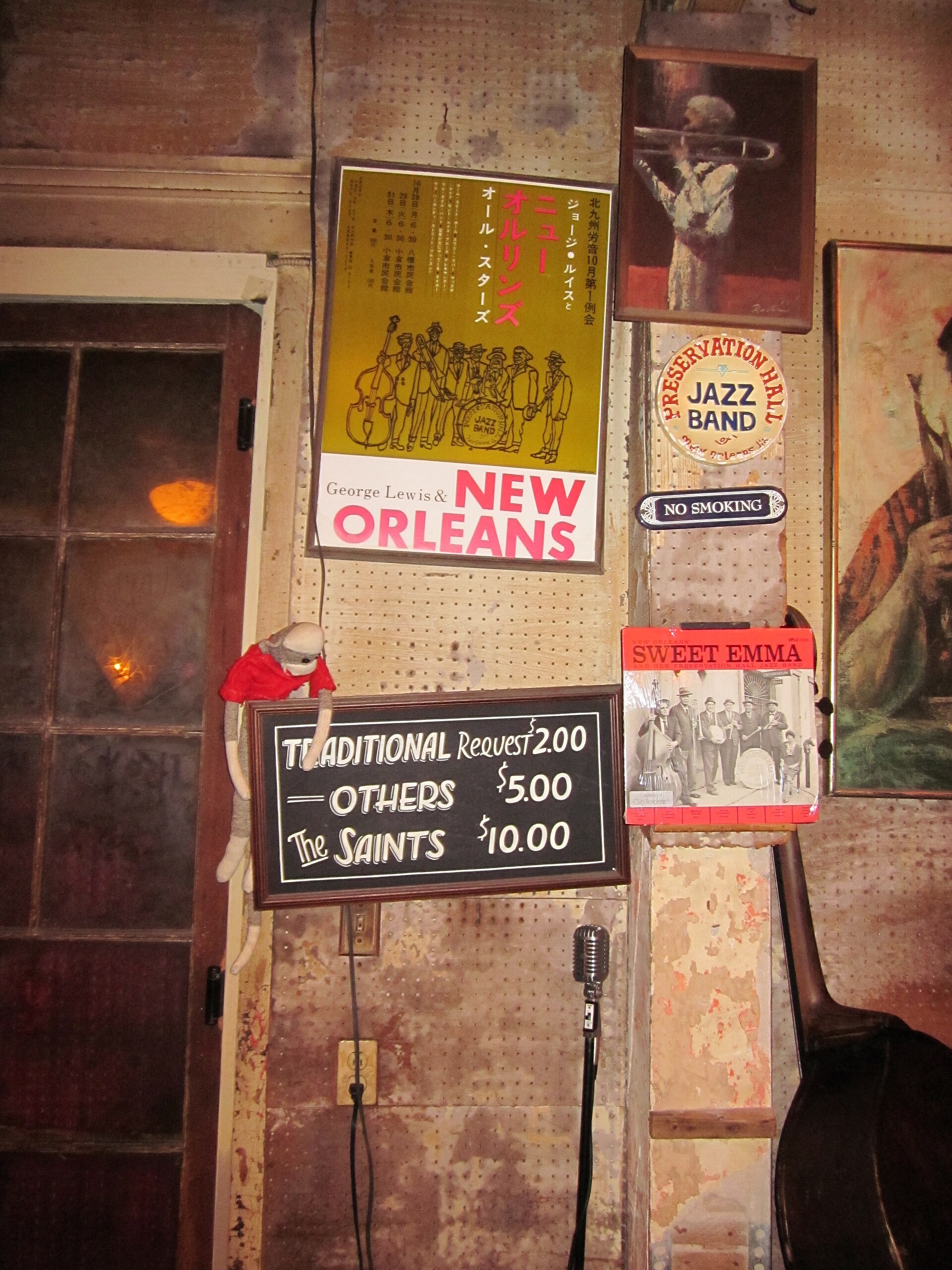
Start where the tradition is guarded most fiercely. Preservation Hall, at 726 St. Peter Street in the French Quarter, was founded in 1961 by Allan and Sandra Jaffe to give the city's aging traditional jazz musicians a place to play the music their way, and the room has barely changed since: bare wooden benches, no bar, no food, no amplification worth the name, and a band of master players a few feet in front of you. Concerts run nightly, in short sets of about forty-five minutes, at 8, 9 and 10pm on Mondays to Wednesdays, with additional 5 and 6pm performances on Thursdays to Sundays. Tickets are sold per set, the room is small, and the honest advice is the venue's own pattern: reserve online in advance, because the sets sell out and the walk-up line is a gamble. Photography and recording during performances are not permitted, which is not a quirk but the philosophy: for forty-five minutes, the music is the only screen in the room. Children are welcome, and for a family this is the single best introduction to what jazz was before it was anything else. Go once, early in the trip. Everything else you hear in the city will make more sense afterwards.
Frenchmen Street: the working strip
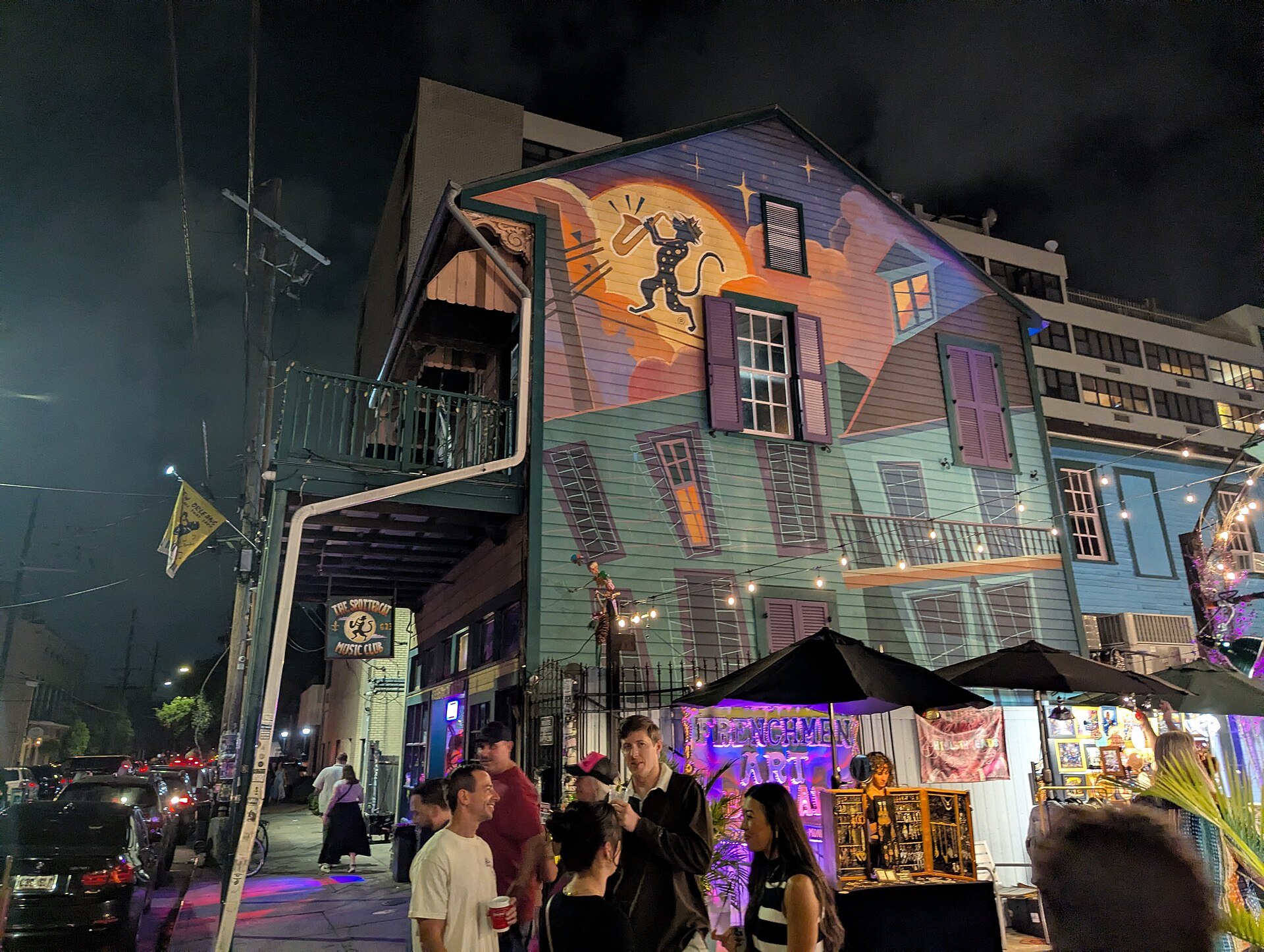
Cross Esplanade Avenue from the Quarter into the Marigny and the music changes address. Frenchmen Street, in the few blocks above Decatur, is where New Orleans goes to hear itself on an ordinary night: a dense run of clubs, most with a modest cover or a one drink minimum, nearly all with live music from the early evening until late. The Spotted Cat Music Club is the strip's beloved scruffy heart, small, cash minded and packed for traditional jazz and swing bands that rotate through the day. d.b.a. runs a serious drinks list beside a stage that books some of the best roots and brass acts in town. The Maison spreads the formula over a bigger room with dinner downstairs and dancing after. The joy of Frenchmen is that it needs no plan: arrive around seven, walk the blocks, and let your ears choose. Two practical notes. Covers and set times change nightly, so treat any printed schedule, including ours, as a sketch and check the club boards on the night. And the strip gets genuinely crowded on weekend nights in season; a Tuesday on Frenchmen is a calmer, more local pleasure than a Saturday, and the bands are no worse for it.
Snug Harbor: the listening room proper
At 626 Frenchmen Street, Snug Harbor Jazz Bistro is the strip's grown-up: a proper listening room with table seating, a separate dining room, and the city's modern jazz headline acts, the pianists, singers and quartets who tour nationally and play this room when they come home. The pattern is two sets a night, typically at 7 and 9pm, with doors half an hour before, and dinner served in the restaurant from 5 to 10pm; advance ticket holders can reserve a dinner table alongside. This is the room for the visitor who found Preservation Hall too brief and Frenchmen too loose: a full evening, a named band, a hushed audience and a kitchen that takes the bistro half of its name seriously. Book the set first and the table second, and book both ahead for any name you recognize, because the room is intimate and the good nights go.
Beyond the strip: the neighborhood rooms
The rest of the map rewards anyone staying more than a weekend. Uptown, Tipitina's on Napoleon Avenue is the city's great standing room club, Professor Longhair's old haunt, all sweat, funk and brass on the big nights. A few blocks over, the Maple Leaf Bar on Oak Street runs poetry, piano and late sets in a room that feels like a house party the neighborhood never ended. In Mid-City, Chickie Wah Wah on Canal Street programs singer-songwriters and jazz trios for an audience that drives in from the surrounding streets. None of these rooms is a tourist product, which is exactly their value: the cover is small, the crowd is local, and the music is being made for the people in it rather than performed at them. The thread connecting them all is Congo Square, in Louis Armstrong Park at the Quarter's edge, where enslaved Africans gathered on Sundays to drum and dance, and where so much of this music begins. Walk it in daylight, read the markers, and the clubs at night will read differently. If you want that ground walked with you by someone who plays the music, the musician-led walk below is the version this site carries, and it ends, properly, in the music itself.
Book the New Orleans jazz walking tourvia Viator · affiliate link
The daytime layer: brass, museums and the street
The clubs are the night shift of a music culture that also works days. Brass bands play the street itself, at second line parades on Sunday afternoons in season, at festivals, and outside the clubs of Frenchmen as an overture to the evening. The New Orleans Jazz Museum, housed in the Old United States Mint at the Quarter's Esplanade edge, is the daytime institution: instruments, photographs and the stories of the players, a few minutes from the French Market and the natural companion to a Congo Square morning. The New Orleans Jazz National Historical Park, the National Park Service's own outpost for this music, programs talks and performances that put rangers and musicians in the same room. None of it competes with the clubs. It explains them, and a visitor who spends one afternoon on the history will hear the night sets with different ears, picking out the parade rhythms under the club music and the funeral tempos under the ballads.
The river version, and how to plan the nights
One night of a trip belongs on the water. The Steamboat Natchez runs an evening jazz cruise from the French Quarter riverfront, two hours on the Mississippi with a live band and the city lit up behind you, and it is the one piece of musical tourism in this guide that admits it is tourism and does it well. Book the evening sailing for the skyline, and treat the music as the river's soundtrack rather than a listening room set.
Book the Steamboat Natchez evening jazz cruisevia Klook · affiliate link
Plan the week as a progression: Preservation Hall first, for the source. Frenchmen second, for the scene. Snug Harbor or a neighborhood room third, for the depth. The listings bible for all of it is WWOZ, the city's listener-supported jazz and heritage station, whose Livewire calendar the clubs themselves feed; check it on the day, because in New Orleans the best set of your trip is often the one that was only confirmed that morning. Base yourself in the French Quarter or at its edge for a music-led trip: every room in this guide except the Uptown pair is at walking distance, and the walk home through the Quarter at midnight, with music leaking from three doorways at once, is part of the program.
Book a place to stayvia Booking.com · affiliate link
Set a New Orleans What's On alert and we will email you when headline club nights, festival line ups and seasonal music series land on the calendar. Bourbon Street will still be there, loud as ever. You will know where the music lives now, and it is not there.
More reading on the articles page, or go straight to the events calendar.