
Guides · Sat, Nov 21, 2026
New Orleans' cemeteries: the cities of the dead, visited properly
Above-ground tombs, oven walls, society tombs and whole streets of the dead: New Orleans buries its people in small stone cities, and visiting them well means knowing which gates are open, which are tour-only, and what changed this autumn when Lafayette Cemetery No. 1 reopened under the Preservation Resource Center after seven closed years. The honest access guide to St. Louis No. 1, Lafayette No. 1, St. Louis No. 2, Metairie and the Canal Street cemetery row, with the etiquette that keeps these places visitable.
New Orleans does not bury its dead so much as house them. In the oldest cemeteries the tombs stand in rows like a small, silent city, with streets, addresses of a kind, and architecture that runs from plain brick vaults to marble temples. Visitors call them the cities of the dead, and the phrase is exact. Visiting them properly is mostly a matter of access and manners: some of these grounds are open to wander, the two most famous are now reached only on authorized tours, and one of them changed its rules this autumn in a way most guides have not caught up with. This is the current position, cemetery by cemetery. Our Garden District guide covers Lafayette Cemetery No. 1 in its afternoon walk; this piece is the full cemetery map, and it treats the Garden District ground in its new tour-only terms.
Why the dead live above ground
The usual explanation is the water table, and it is half true: in a city built on river silt, a deep grave fills with water, and early burials were a grim problem. The fuller answer is culture. French and Spanish colonial practice, Catholic custom and the Mediterranean habit of the above ground tomb all arrived with the city's founders, and New Orleans built in that style: family tombs used across generations, wall vaults stacked like ovens and rented or owned in rows, and society tombs raised by the benevolent associations, fire companies, trades and national groups that once organized the city's mutual aid. A tomb here is not a plot but a piece of property, maintained by families, argued over in wills, and restored, when it is lucky, by the preservation groups this guide keeps meeting. Read that way, a cemetery visit is not morbid tourism. It is the city's social history written in stone, and it deserves the same attention as the houses.
St. Louis Cemetery No. 1: tour-only, and worth it
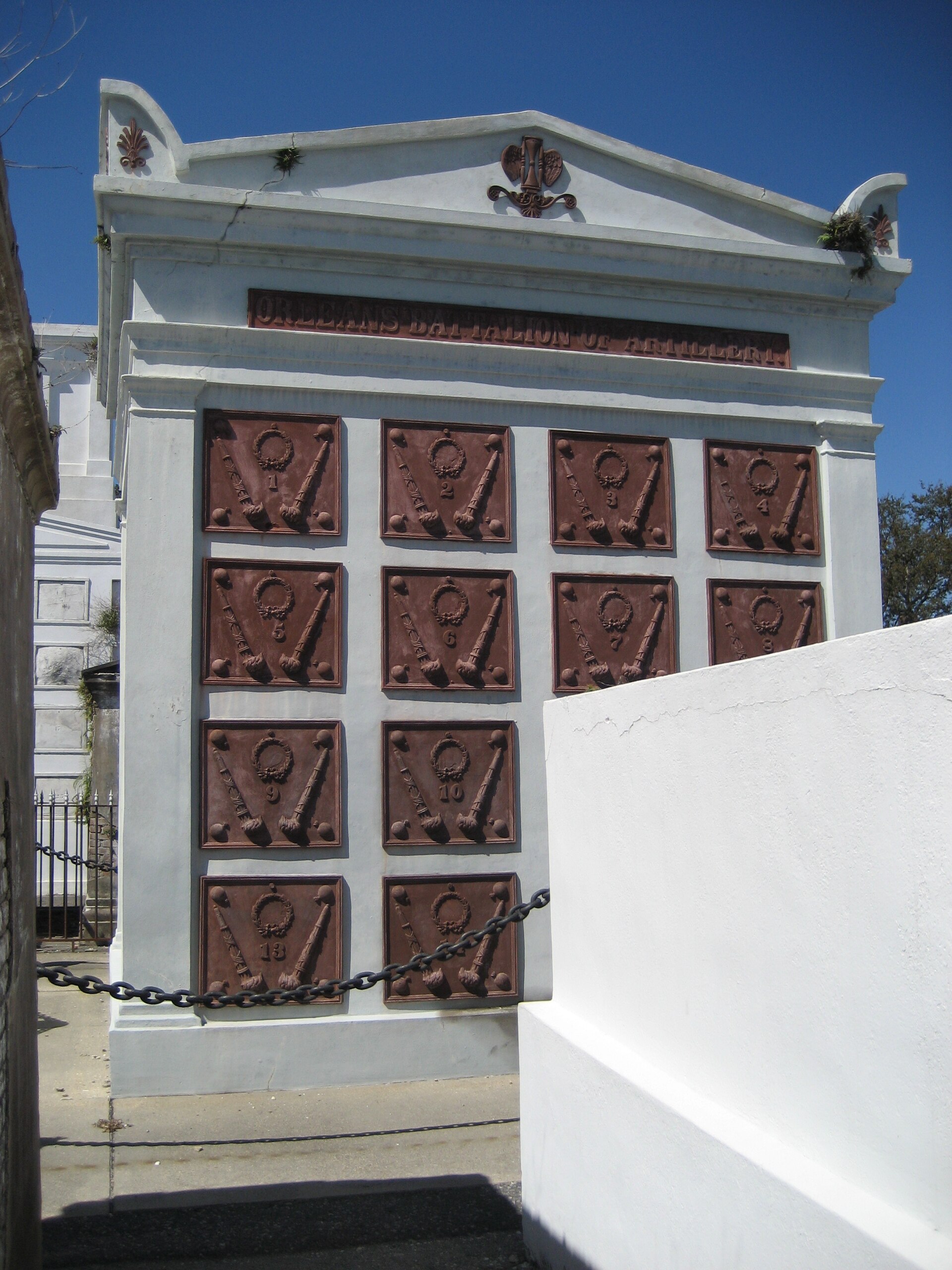
The oldest and most famous of them, established in 1789 on Basin Street at the Quarter's edge, holds the tomb believed to be Marie Laveau's, the Italian Society's towering tomb, and rows of oven vaults like the artillery tomb in our photograph. It is also firmly closed to casual entry. To protect the tombs after years of vandalism, the Archdiocese of New Orleans limits entry to families with a valid family pass and to guests on the Official Tour, run in partnership with New Orleans Catholic Cemeteries. The tour lasts about fifty-five minutes, groups are capped at twenty, departures run through the day from the Cemetery Tour Desk at Basin St. Station, at 501 Basin Street, and it operates rain or shine. Book ahead: the cap is real and the popular times go. The site's wired ticket for this cemetery is the Viator product below; note that it is sold as an after-dark tour in the site's place record, so check the departure on the booking page matches the visit you want, and for the standard daytime official tour you can also book direct with the operator. Either way, do not arrive expecting to walk in alone. Nobody does, any more, and the restriction is why the place survives.
Book the St. Louis Cemetery No. 1 tourvia Viator · affiliate link
Lafayette Cemetery No. 1: reopened this autumn, on new terms
The Garden District's walled ground, laid out in 1833 on Washington Avenue, was closed to public tours in 2019, and for seven years the only honest advice was to look through the gates. That changed this autumn, and the change is the news in this guide. On 21 September 2026 the Preservation Resource Center of New Orleans announced that the City of New Orleans had selected it, after a public bid, as the sole tour operator for Lafayette Cemetery No. 1, with guided tours returning in early October 2026 through its Save Our Cemeteries department. The terms, from the PRC's own announcement, are these: tours of seventy-five to ninety minutes, groups of no more than sixteen, a seasonal schedule seven days a week that always yields to cemetery operations, funerals and family visits, because this remains an active burial ground. There are no ghost tours and no entertainment framing; the program is historical, a share of revenue goes to the city, and PRC dedicates part of its proceeds to restoring tombs in the city's cemeteries. Apart from families dealt with through the city's cemetery division, only guests booked on a PRC tour go inside. So book the PRC tour direct with the PRC if this cemetery is your reason for coming, and treat any third party tour promising entry to Lafayette No. 1 with suspicion: general Garden District walking tours read it, rightly, from the gates. We verified this position again on 16 November 2026 against the PRC's announcement and its cemetery pages, which still carry the program as live.
The ones you can wander: No. 2, Metairie and the Canal row
St. Louis Cemetery No. 2, a few blocks from No. 1, holds some of the finest society tombs in the city and a century of musicians, and it is the connoisseur's ground; go in daylight, in company, and with the same respect as any churchyard. Up at the end of Canal Street the streetcar delivers you to a whole district of the dead: Greenwood, Cypress Grove, St. Patrick's and the Metairie Cemetery grounds cluster around the Cemeteries Transit Center, most of them open during the day for quiet wandering among obelisks, firemen's tombs and family mausoleums. Metairie Cemetery itself, out on Metairie Road, is the grand garden cemetery, all lakes, avenues and monuments, and it rewards an unhurried hour more than any checklist. The etiquette everywhere is simple and non-negotiable: these are active burial grounds, so stay on paths, do not touch or rub the tombs, never mark one, keep voices down near services, and leave before closing. Photography for memory is generally accepted; posing on tombs is not, and the difference is obvious to everyone watching.
The living traditions: All Saints and the jazz funeral
Visit in late October or early November and the cemeteries show their working face. Around All Saints' Day, on 1 November, New Orleans families return to their tombs to clean, whitewash, repair and lay flowers, a custom as old as the grounds themselves, and the cemeteries fill with ladders, buckets and generations working side by side. It is the clearest possible demonstration that these are not ruins but family property in continuous use, and visitors who pass through on those days should do so quietly and without photographing the work. The other living tradition is the jazz funeral, the brass band procession that walks a musician or a beloved local to the grave, slow and mournful on the way in and released into celebration on the way out. Visitors encounter them by chance rather than by booking, and the etiquette is the etiquette of any funeral that is not yours: watch from a respectful distance, do not join the family line, and let the second line form behind the band, where the community walks. One more ground deserves its sentence: St. Roch Cemetery in the Bywater, founded around a yellow fever vow, keeps a small chapel hung with the offerings of the healed, plaster limbs and crutches among them, and it is the most intimate of all the city's burial grounds.
Base for a cemetery-led trip in the Garden District or Uptown if Lafayette is the headline, with the streetcar at your corner and the Canal cemeteries at the other end of the same fare; base in the Quarter if St. Louis No. 1 leads. The stay route below is the Garden District and Uptown search.
Book a place to stayvia Booking.com · affiliate link
Set a New Orleans What's On alert and we will email you when cemetery tour schedules change, when restoration open days are announced, and as seasonal cemetery events land on the calendar. The cities of the dead are not a sideshow in New Orleans. Visited properly, they are half the city's autobiography, and they ask only that you knock before entering.
More reading on the articles page, or go straight to the events calendar.