
Guides · Mon, Nov 16, 2026
The Garden District and the St. Charles streetcar: the slow afternoon
The best afternoon in New Orleans costs three dollars and asks nothing of you but time: a Jazzy Pass, the green St. Charles streetcar out through the oak canopy, and a slow walking loop of the Garden District in the right order, Lafayette Cemetery No. 1 with its new tour only status explained plainly, Commander's Palace in context, the cornstalk fence, the Buckner Mansion, and Magazine Street to finish.
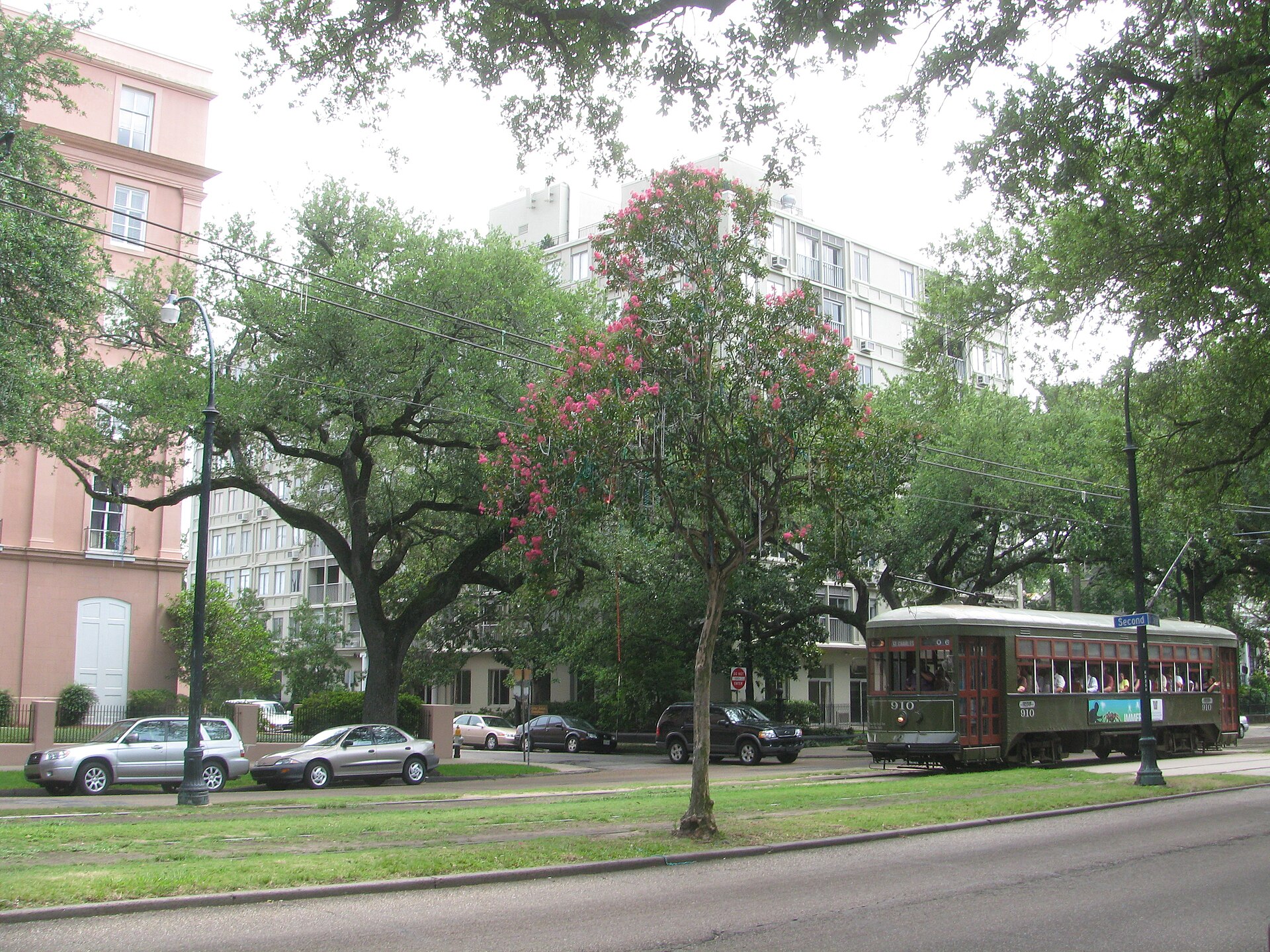
Every visitor does the French Quarter at full speed and the Garden District, if at all, through a tour bus window. That is exactly backwards. The Quarter rewards energy; the Garden District punishes it. This is the neighborhood the slow way, built as one afternoon: ride out on the oldest streetcar line in the world, walk a loose loop of about a mile and a half past the great houses in the order they make sense, understand the cemetery rather than just photograph its gates, and finish on Magazine Street as the light goes. Nothing in it needs booking except lunch, if you want the famous one, and a guided walk, if you want the stories told properly. Our attraction page for the Garden District and the St. Charles Streetcar carries the practical record; this is the afternoon itself, sequenced.
Start with the streetcar, not the houses
The St. Charles line, RTA route 12, has run this route since 1835, which makes it the oldest continuously operating streetcar line in the world. The green cars are the attraction before the houses are: wooden benches, windows that open to the weather, and a slow roll down the grassy neutral ground, as New Orleans calls its medians, under a tunnel of live oaks. Board downtown at Canal Street, where St. Charles begins its run under the name Carondelet, and ride Uptown. The mansions start almost at once and improve as the avenue bends.
Pay the way locals tell visitors to pay. A single ride is $1.25, with exact change in cash, because drivers carry no change, or through the RTA Le Pass app. For this afternoon, buy the one day Jazzy Pass at $3 instead: it covers unlimited rides on RTA streetcars, buses and ferries for 24 hours from first use, it lives in the Le Pass app, and it turns every later decision, one more stop, a ride back at dusk, the ferry another day, into a free one. A three day Jazzy Pass at $8 does the same job for a long weekend. Sit on the right hand side heading Uptown for the first run of houses, and get off at Washington Avenue. That corner is the hinge of the whole afternoon.
The walking order
The Garden District was laid out in the 1830s on the old Livaudais plantation, upriver from the French Quarter, as the American answer to Creole New Orleans: big lots, deep gardens, and Greek Revival and Italianate houses built to be read from the street. They are still private homes, every one of them, so the sightseeing is from the sidewalk, and the sidewalk is genuinely enough. Walk it in this order.
Washington Avenue first. The corner holds the afternoon's two anchors facing each other across the street. On one side, the white walls of Lafayette Cemetery No. 1, which gets its own section below. On the other, at 1403 Washington Avenue, the turquoise and white Victorian pile of Commander's Palace, a New Orleans landmark since 1893 and the Brennan family's flagship for Haute Creole cooking since the 1970s. You do not need to eat there to use it: the building is the neighborhood's exclamation mark, and lunch there, booked well ahead, is the classic way to punctuate this walk. At the Prytania corner, the old skating rink building known as The Rink holds the Garden District Book Shop, the right browse before you start on the houses.
Then Prytania and the side streets. Walk south on Prytania Street, the district's show front, and take the side streets as loops rather than a march. On Fourth Street, at number 1448, Colonel Short's Villa wears the most photographed fence in the city: cast iron cornstalks twined with morning glories, made in 1859, by the much told story, for the Kentucky born owner's homesick wife. On First Street, the Brevard-Rice House at 1239, built in 1857, is the house readers come for: Anne Rice lived here, and its mood fed the Mayfair witches of her novels. First Street also carries the Payne-Strachan House, where Jefferson Davis died in 1889, and the Robinson House, often cited as the largest in the district. Back on Prytania at 2504, the Women's Opera Guild House shows the Greek Revival manner at full scale. Drop down to Coliseum Street for the row of narrow houses locals call the Seven Sisters, a reminder that the district was never only mansions, then close the loop on Jackson Avenue at 1410, where the Buckner Mansion of 1856, built for cotton factor Henry Sullivan Buckner and familiar to a generation as a television school for witches, fills its block with galleries. A good guide strings these houses into one story of money, cotton and taste; the walk below is that version, and it is the one paid product this afternoon genuinely needs.
Book the Garden District walking tourvia Viator · affiliate link
Lafayette Cemetery No. 1: the status, plainly
Most guides still get this wrong in one direction or the other, so here is what is true now. Lafayette Cemetery No. 1, laid out in 1833 by the old City of Lafayette and the first planned cemetery in what is now New Orleans, holds its above ground tombs in a walled square block on Washington Avenue. It was closed to public tours in 2019, and for years the only honest advice was to look through the gates, which is what most Garden District walking tours, including the one above, still do.
That changed this fall. In September 2026 the City of New Orleans selected the Preservation Resource Center of New Orleans, after a public bid, as the sole tour operator for the cemetery, and guided tours returned in October 2026 for the first time since 2019. The terms matter: tours run 75 to 90 minutes, in groups of no more than 16, on a seasonal schedule seven days a week that always yields to funerals, family visits and cemetery operations, because this is an active burial ground. There are no ghost tours and no entertainment framing; the program is historical, and part of its proceeds goes to restoring tombs in the city's cemeteries. And the gate rule is now strict: apart from families vetted by the city's cemetery division, only guests booked on a Preservation Resource Center tour are allowed inside. So the choice is simple. Book the PRC tour if the cemetery is your reason for coming, and book it direct with the PRC; take a general Garden District walk for the houses, and accept the cemetery from its gates, where a good guide can still teach you how to read an oven tomb and a society tomb from the sidewalk.
Lunch, in context
Commander's Palace is the lunch this neighborhood is famous for, and it behaves like it: reservations are the plan, not a hope, the dining rooms dress up for the occasion, and the weekend jazz brunch is a fixture of the city's calendar. The kitchen is the serious part, the place where Paul Prudhomme and Emeril Lagasse both cooked before they were famous, and the bread pudding soufflé is the order regulars will give you unprompted. If a table there does not fit the day, the afternoon loses nothing: Magazine Street, two blocks south of the walking loop, feeds walkers at every level, and a long lunch there, followed by the shops, is the local version of the same afternoon. Either way, eat before the walk or after it, not during; the houses deserve an unhurried hour.
Finish on Magazine, ride back at dusk
End where the district exhales. Magazine Street runs for miles of small shops, galleries and cafés along the district's southern edge, and it is built for the last hour of an afternoon like this one. Then walk back up to St. Charles Avenue and take the streetcar downtown as the light drops: the oaks go first, the houses light their windows, and the car fills with people heading in for the evening. It is the same $3 pass, the same green car, and a completely different avenue from the one you rode at noon.
Stay on the line if you can. A Garden District or Uptown base puts this afternoon at your door and the streetcar at your corner, and it is the quiet end of the city to come home to; a French Quarter base trades that calm for the riverfront and the old town at walking distance. Both searches below are set to a sample weekend; the booking page rolls the dates to yours.
Book a place to stayvia Booking.com · affiliate link
Book a place to stayvia Booking.com · affiliate link
Set a New Orleans What's On alert and we will email you when Garden District events, cemetery tour openings and seasonal walks land on the calendar. The Quarter is the city at full volume. This afternoon is the same city, turned down, and it is the one visitors talk about on the flight home.
More reading on the articles page, or go straight to the events calendar.